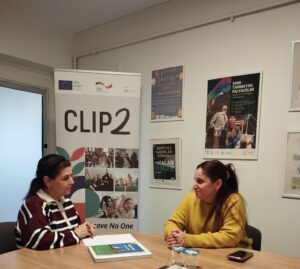
Manal was born in Damascus and later moved to Aleppo after getting married at the age of 25. Before her marriage, she was a very social and active person working as a hairdresser. She styled the hair and makeup of actresses and models visiting the hairdresser’s shop for photo shoots. However, after moving to Aleppo, she struggled to adapt to her new life and was not allowed to continue working.
Although life was modest, Manal and her family were happy. She had two children, including a son diagnosed with autism spectrum disorder. Determined to continue her profession, Manal eventually converted one room of her house into a small hair salon and started working again.
When the war intensified, their lives changed dramatically. Bombings became frequent, their home was hit several times, and the family often had to hide in the bathroom for days to stay safe. One day, while Manal was cooking, a missile hit their building. She had to flee immediately, leaving everything behind.
When she reached the border, she carried only a small bag containing a hairdryer, a brush, and scissors — the basic tools of her profession. During the border control, officials took her scissors, which deeply saddened her.
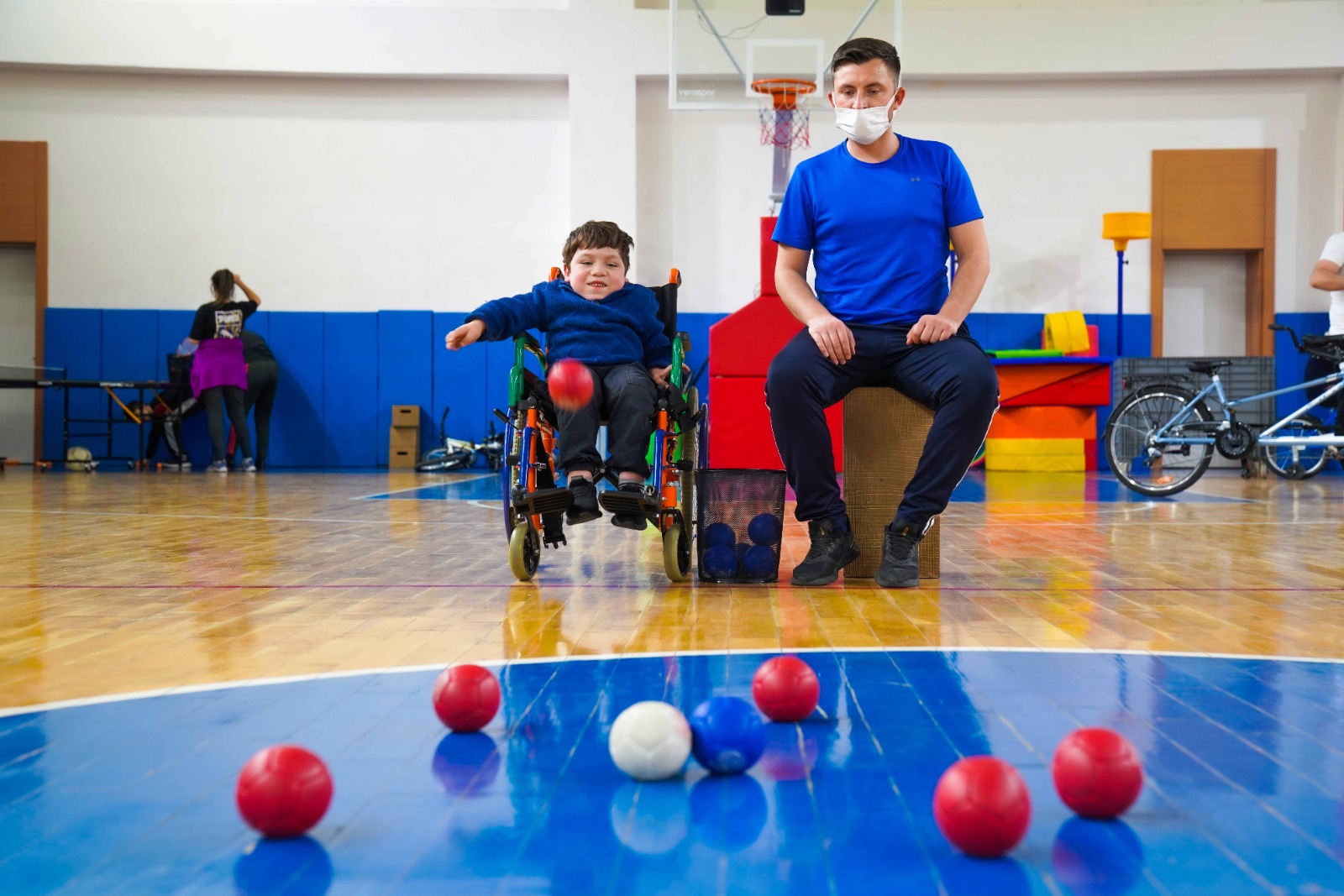
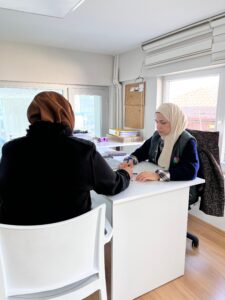
After arriving in Türkiye, Manal initially struggled with severe depression. With the encouragement of a neighbour, she applied to the Multi-Purpose Support Centre of ADA Türkiye partner Human Resource Development Foundation (HRDF) co-funded by the EU and BMZ. Her son began receiving psychiatric support at the centre, and she was also encouraged to attend psychological counselling.
Over time, Manal participated in HRDF’s Women’s Solidarity Programme (KADAP) as well as computer and Turkish language courses.
She later joined the women’s protection module and attended psychology seminars.
Eventually, she completed the KADAP trainer training programme and became a trainer herself.
Today, Manal supports other women who face similar challenges by facilitating sessions within the programme. She has also transformed a room in her home once again into a small hair salon, providing services to neighbours and earning an income.
“The first day I brought my son to the centre, I felt completely hopeless,” Manal recalls. “Today, I feel strong.”
Her daughter is now studying at university, and her son is doing much better thanks to regular support and treatment.
Manal says she no longer plans to return to Syria. Instead, she has built a new life in Türkiye and remains deeply grateful for the support she received.
Co-financed by the European Union Humanitarian Aid (DG ECHO) and the German Federal Ministry for Economic Cooperation and Development (BMZ), and implemented by the Deutsche Gesellschaft für Internationale Zusammenarbeit (GIZ), ADA Türkiye was established in 2021 to ensure long-term coordination and sustainable cooperation. To date, the initiative has reached over 120,000 people through protection services, provided earthquake-related assistance to approximately 31,000 individuals, and implemented over 3,000 activities to promote social cohesion between communities.