GIZ Country Director Robert Kuenne, German Embassy representative Dr. Philipp Rock, and GIZ CLIP 2 Programme Expert Ali Eren Karadeniz visited the Kilis Community Center of the International Blue Crescent Relief and Development Foundation (IBC) to observe ongoing activities and the impact of the CLIP 2 Project on the ground.
IBC’s work in Kilis began in 2012 with the establishment of a field hospital following the crisis in Syria. Since then, tens of thousands of people have been reached in various areas, including education, health, protection, employment, livelihoods, and shelter.
Services Continue After the Fire
The building that had served as a community center for many years was severely damaged by a fire in March. However, with the support of donors and close cooperation with local public institutions, a new container-based community center was established in a short period of time.
During the visit, the delegation toured the fire-damaged site and the rebuilt center and received information about the reconstruction process. Despite operating in a more limited space, the new center continues to serve as a safe meeting place where communities in Kilis can access support services and participate in educational and social activities.
IBC teams also briefed the visitors on ongoing activities, cooperation with public institutions and civil society organizations, evolving community needs, and plans for future work.
Women Share Their Priorities Directly
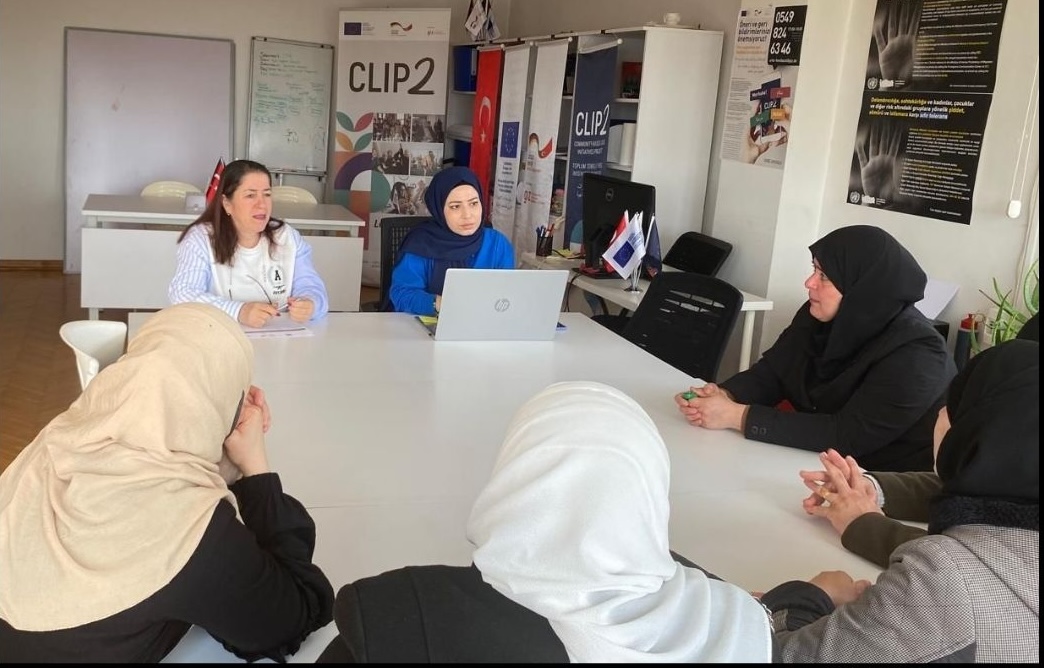
As part of the visit, a focus group discussion was held with approximately 15 women participants, giving them an opportunity to directly share their needs, challenges, and priorities based on their own experiences.
Participants particularly highlighted the need for education and social spaces, challenges related to protection, increased employment opportunities, and the continuation of social and financial support for people in need.
The visit once again highlighted the impact of IBC’s long-standing work on local communities in Kilis, as well as the importance of listening directly to community members as needs evolve and ensuring the continuity of sustainable, community-based programmes that can respond to these needs.